WHO WE ARE

PAWAS ACADEMY LTD. (PAWAS) is a holistic grassroots sports development organization based in Jos, Plateau State, Nigeria. Founded in 2007, the Academy contributes to the development of young people between the ages of 10 and 22 through sports, access to uninterrupted academic study, and practical life skills.

Beyond sports, PAWAS integrates life skills training, mental health and psychosocial support (MHPSS), and financial literacy into its programming, recognizing that talent alone is insufficient without resilience, discipline, and decision-making capacity. Through strategic partnerships and a growing network of scouts and agents, the academy facilitates local and international club linkages, while also enabling access to education-athletic scholarships. This ensures that players are not only developed but are positioned for sustainable career trajectories.

As a socially conscious institution, PAWAS leverages sports as a tool for community development, peacebuilding, and youth empowerment, particularly among underserved populations. Its approach is anchored in systems thinking which recognizes that athlete success is influenced by interconnected factors including education, mental wellbeing, economic opportunity, and social support. In doing so, PAWAS is developing sound athletes, and nurturing future leaders.

It holds a premier position in grassroots football development in Plateau State and is formally registered with the Corporate Affairs Commission (CAC), affiliated with the Plateau Football Association (PFA), and recognized by the Nigeria Football Federation (NFF) and the Fédération Internationale de Football Association (FIFA).

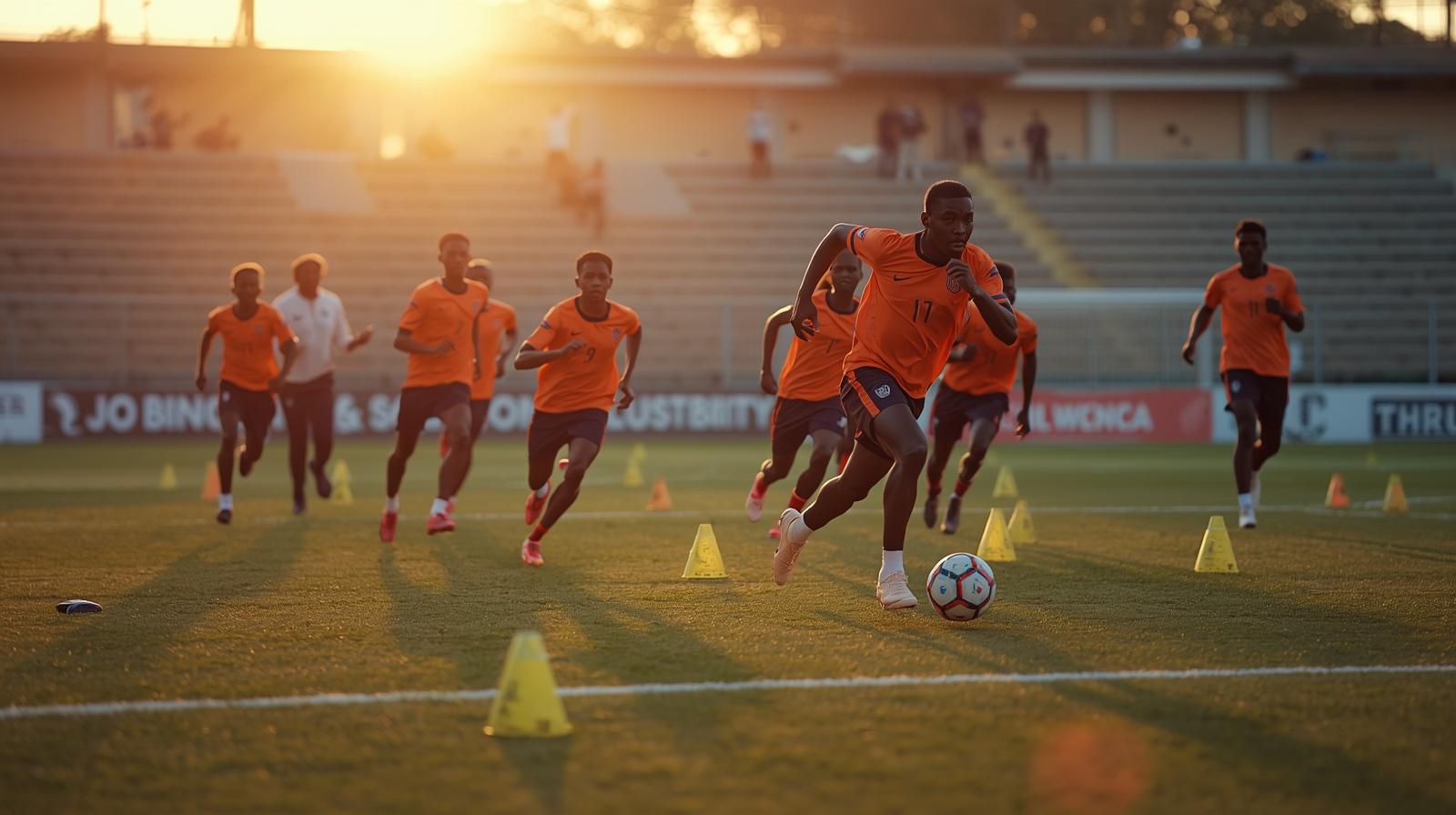
Currently, the Academy operates from the Police Field Football Facility in Jos. PAWAS is led by a 4 member Director board comprising of a seasoned Coach, A football administrator, and Ex player and a sports logistician; all of humanitarian background.
At its core, PAWAS is a Pan-African institution. It believes that Africa’s young people do not need to choose between sport and education, and that communities can build their own pathways to dignity, productivity, and excellence without depending on external systems or agendas.


MISSION & VISION

At PAWAS, our work is guided by a clear vision and mission that reflect our commitment to developing young athletes into well-rounded individuals who drive positive change in society.

Our vision

We envision a Nigeria where young athletes are principled and productive citizens contributing to positive community transformation.

Our vision

Building an inclusive ecosystem that nurtures talent, strengthens education outcomes, and equips young people with the skills and values for lifelong impact.

Core Values

At PAWAS, our approach is grounded in a FIT Culture; a values-driven framework that shapes how we train, learn, and grow on and off the pitch. It guides us to pursue excellence with purpose, act with integrity, and succeed together as a team.

Focus

Committed to pursue mastery in sport, school, and character.

Integrity

We act with transparency and fairness at all times.

Teamwork

Ubuntu: I am because we are. We ensure no one is left behind

OUR THREE-PILLAR MODEL

PAWAS is built on three mutually reinforcing pillars. Sport builds discipline and opens doors. Education ensures those doors lead somewhere fruitful and sustainable. Life skills equip young people to walk through them with confidence. All three operate together and ensures that no athlete is forced to choose between them.

SPORTS

  • Talent Scouting: Open Scouting, Grassroots Tournaments

  • Player Training: Year-Round Training, Camps

  • Player Pathways: Player Profiling, Career Advancement

  • Athlete Support: Kit Financing, Career Investment, Health Support, Family Engagement

EDUCATION

  • Academic Support: School Enrolment, Academic Retention, Learning Transition

  • Career Guidance: Mentorship Platform, Career Series

LIFE SKILLS

  • Leadership Growth: Character Building, Leadership Training

  • Skills Development: Digital Skills, Sports Careers

  • Economic Skills: Financial Literacy, Entrepreneurship

  • Social Development: Social Cohesion, Player Wellbeing

PAWAS AT A GLANCE

The table below provides a quick-reference summary of PAWAS Academy’s key facts and operational data. Fields marked [To Be Confirmed] should be updated with verified internal records.

Founded

2007

Location

Jos, Plateau State, Nigeria

Training Facility

Police Field Football Facility, Jos

Training Hours

3:30 PM – 5:30 PM (Monday – Saturday)

Age Groups Served

Junior: 10–14 years | Senior: 15–19 years

Active Players (Current)


Total Players Developed


Players Transitioned to Professional/Semi-Pro Clubs


OUR STORY

PAWAS ACADEMY was founded in 2007 and formally registered in 2012 by people who saw a recurring problem in Plateau State: talented young footballers were dropping out of school to chase professional careers that never materialised, while promising students were abandoning sport because no institution supported both. The Academy was created to end that false choice.

Starting from the Police Field Football Facility in Jos with a small coaching team and a clear purpose, PAWAS built its programme step by step, earning its CAC registration, affiliating with the PFA, gaining NFF recognition, and competing in local and national competitions. Over more than a decade, the Academy has participated in the Plateau State Super League, the FA Cup, and PFA Pre-Season Tournaments, while also pursuing international competition opportunities.

What drives PAWAS is simple: the belief that a child from any community in Nigeria and beyond, however underprivileged, deserves the same chance to develop their talent, finish their education, and build a dignified life. Sport is how PAWAS opens that door. Education and life skills are how it makes sure the door stays open.


Development Timeline

YEAR

WHAT HAPPENED

2007

Academy founded.

2012

CAC registration obtained. Training begins at Police Field Football Facility.

2013–2015

First player cohorts enrolled. PFA competition debut.

2015–2017

FA Cup and Super League participation. Three-pillar framework formalised.

2017–2019

NFF recognition secured. First player-to-club transitions. Staff structure consolidated.

2019–2021

International competition exposure. MHPSS and safeguarding programming introduced.

2021–2023

Life Skills pillar fully launched. Digital literacy programme begins.

2024–Present

Strategic growth planning. Pan-African positioning formalised. Partnership development underway.


YOUTH DEVELOPMENT & AFRICA’S DEMOGRAPHIC DIVIDEND

Africa is the world’s youngest continent. Nigeria will have one of the largest populations on earth by 2050, and the majority will be young. Whether that youth becomes an economic asset or a social burden depends almost entirely on whether institutions like PAWAS exist and are supported.

Human Capital Development (HCD) means investing in people, in their health, education, skills, and agency. The Demographic Dividend is the economic benefit a society earns when its young people are developed into productive contributors rather than left as dependents. PAWAS Academy does this work every day, at the Police Field Football Facility in Jos, from 3:30 to 5:30 in the afternoon.

Every player who earns a scholarship, transitions to a professional club, builds a small business, or returns to coach the next generation is a unit of dividend realised. This is not development theory. It is what happens when you give a young person in Plateau State a ball, a classroom, and someone who believes in them.

How PAWAS Contributes to HCD

  • Physical development — structured training builds fitness, discipline, and resilience during critical growth years.
  • Cognitive development — academic integration ensures every player completes their education alongside their sport.
  • Social development — life skills programming builds financially literate, emotionally healthy, community-minded citizens.
  • Economic contribution — players who transition to careers in sport, coaching, or enterprise shift from dependants to contributors.


Shopping Basket